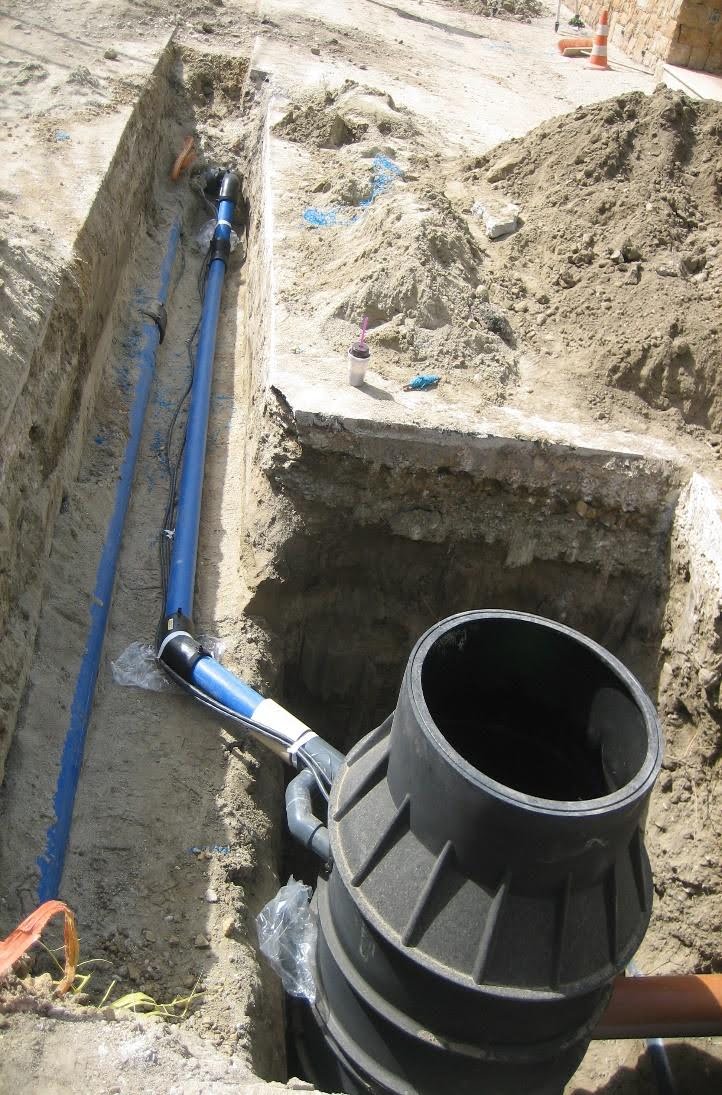
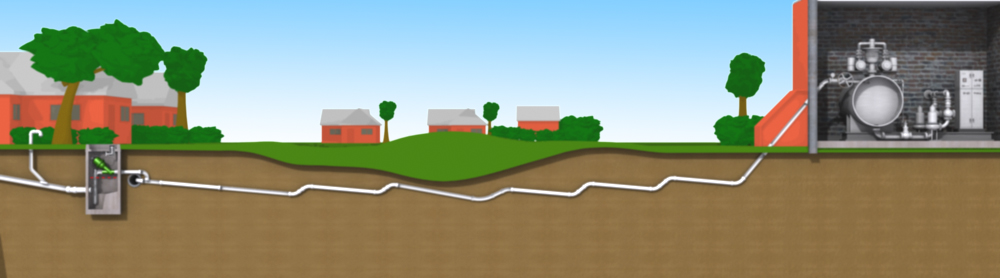
Vacuum sewer systems are a modern, mechanized method of wastewater collection and transport, fundamentally different from conventional gravity systems. Instead of relying on ground slope, negative pressure (vacuum) is created inside the pipelines, ensuring rapid and safe wastewater flow to the vacuum pumping station.
This technology has been successfully applied worldwide for decades and in recent years has been dynamically implemented in Greece, offering a reliable and sustainable solution for the sewerage infrastructure of the future.
Vacuum sewer systems are mechanized systems for wastewater transport. Unlike conventional gravity systems, they operate by creating negative air pressure (vacuum) inside pipelines to generate flow. This technology has been proven worldwide, with hundreds of installed systems. Their design in the countries of the European Union is based on the EN 16932 standard.
A typical Vacuum System consists of:
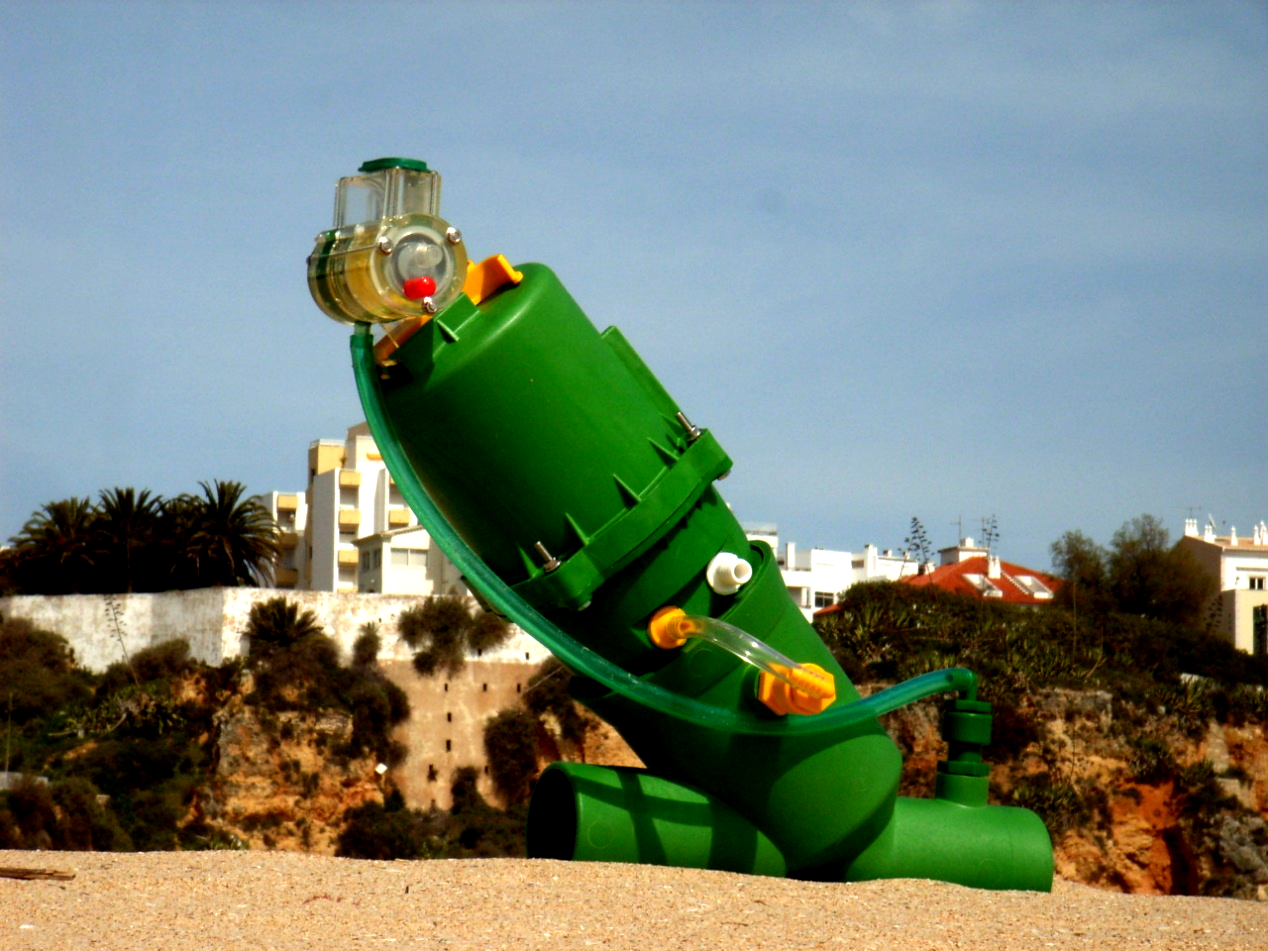
Vacuum valves open automatically when wastewater accumulates in the chamber, admitting both wastewater and the right amount of air, then close again. The air-to-water ratio ranges from 2:1 to 5:1.
They operate pneumatically by differential pressure, ensuring reliable and complete wastewater transport.
Specialized automation and remote-control systems ensure full supervisory control and intervention capabilities.
Intravac’s expertise in vacuum sewer networks has established it as a leader in Greece, pioneering this sector and continuing to deliver successful projects while monitoring new, improved technologies.